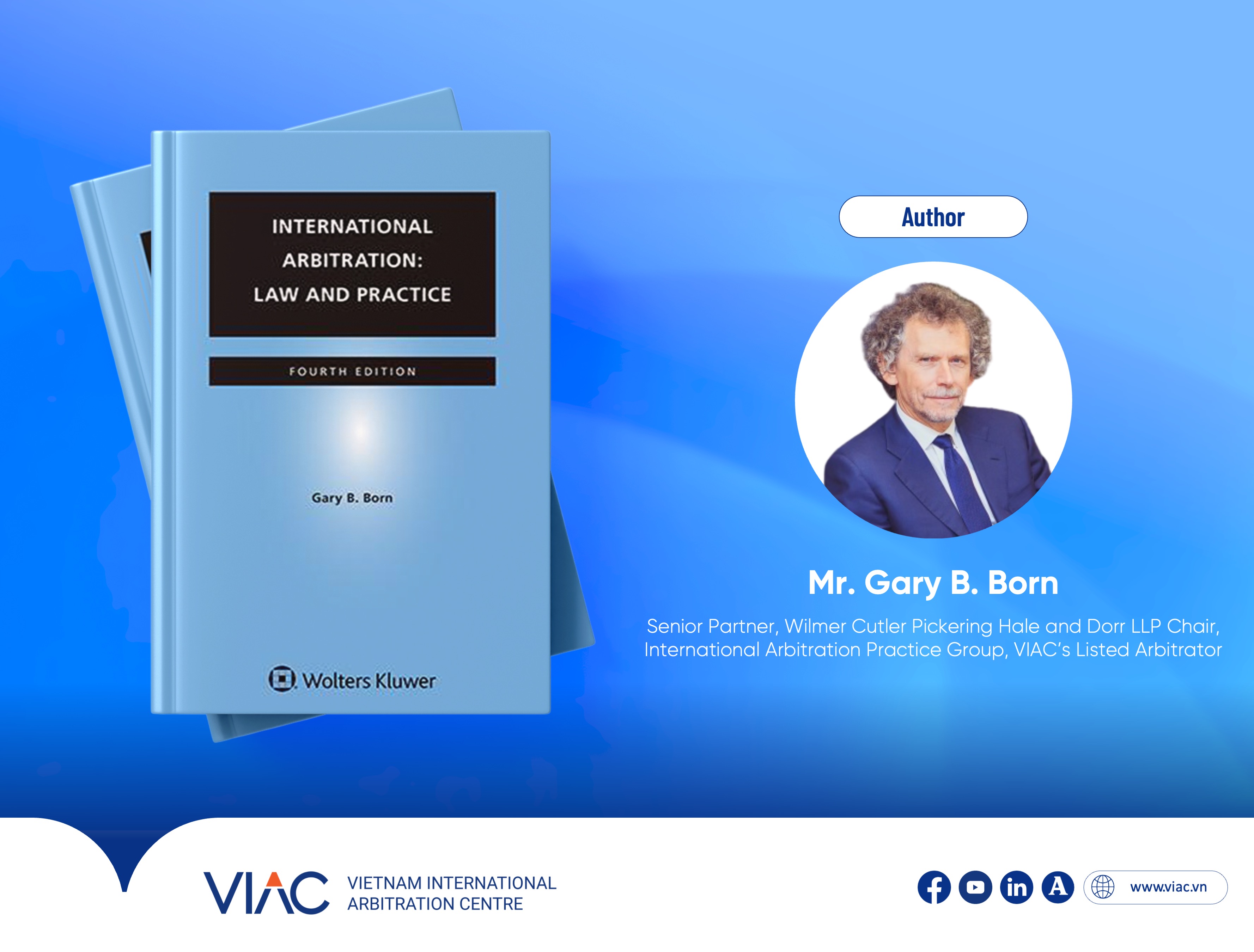
International Arbitration: Law and Practice, Fourth Edition provides comprehensive and authoritative coverage of the basic principles and legal doctrines, and the practice, of international arbitration. The book contains a systematic, but concise, treatment of all aspects of the arbitral process, including international arbitration agreements, international arbitral proceedings and international arbitral awards. The Fourth Edition has been comprehensively updated to include recent legislative amendments, judicial decisions and arbitral awards. Among other things, the book provides a detailed treatment of the New York Convention, the UNCITRAL Model Law on International Commercial Arbitration, all leading institutional arbitration rules (including ICC, SIAC, LCIA, AAA and others), the ICSID Convention and ICSID Arbitration Rules, and judicial decisions from leading jurisdictions.
This highly regarded work that addresses both international commercial arbitration and the related fields of investment and state-to-state arbitration is essential reading for any student of international arbitration and guides practitioners through the entire arbitral process, beginning with drafting, enforcing and interpreting international arbitration agreements, to selecting arbitrators and conducting arbitral proceedings, to recognizing, implementing and seeking to annul arbitral awards.
Table of Contents:
Chapter 1: Introduction to International Arbitration
Part I: International Arbitration Agreements
Chapter 2: International Arbitration Agreements: Legal Framework
Chapter 3: Formation and Validity of International Arbitration Agreements
Chapter 4: Interpretation of International Arbitration Agreements
Chapter 5: International Arbitration Agreements: Non-Signatory Issues
Part II: International Arbitral Proceedings
Chapter 6: International Arbitral Proceedings: Legal Framework
Chapter 7: Selection and Removal of Arbitrators in International Arbitration
Chapter 8: Procedural Issues in International Arbitration
Chapter 9: Disclosure and Evidence-Taking in International Arbitration
Chapter 10: Confidentiality and Transparency in International Arbitration
Chapter 11: Provisional Measures in International Arbitration
Chapter 12: Multi-Party and Multi-Contract Issues in International Arbitration
Chapter 13: Choice of Substantive Law in International Arbitration
Chapter 14: Legal Representatives and Professional Responsibility in International Arbitration
Part III: International Arbitral Awards
Chapter 15: International Arbitral Awards: Legal Framework
Chapter 16: Annulment of International Arbitral Awards
Chapter 17: Recognition and Enforcement of International Arbitral Awards
Chapter 18: Investor-State and State-to-State Arbitration
About the author – Mr. Gary B. Born:
Overview
Mr. Born has participated as counsel in more than 675 international arbitrations, including four of the largest ICC arbitrations and several of the most significant ad hoc arbitrations in recent history. Among many accolades for his work as counsel, Mr. Born received the Global Arbitration Review inaugural “Advocate of the Year” award, the Client Choice award for “Best International Arbitration Practitioner” and the Best Lawyers “London Arbitration Lawyer of the Year” award. He is one of only two practitioners to achieve “starred” status for international arbitration in the Chambers Global and Chambers UK guides.
Dispute resolution experiences
Mr. Born has represented European, US, Asian and other companies in arbitrations under all leading institutional rules (ICC, LCIA, AAA, Vienna, Stockholm, ICSID) and in ad hoc arbitrations in all leading international seats (London, Paris, Geneva/Zurich, Vienna, Stockholm, New York, Washington, Singapore). He has particular experience in joint venture, investor-state, M&A, investment banking and other financial services, project finance, energy, oil and gas, intellectual property and insurance disputes.
Mr. Born heads the firm's international arbitration group, which is based in London with lawyers in in our New York, Washington, Boston, Silicon Valley and Berlin offices. Mr. Born also advises on the litigation of international disputes in US courts. He has particular experience in the fields of jurisdiction, enforcement of judgments, conflict of laws and international judicial cooperation, and also serves as an expert witness on aspects of US private international law in foreign proceedings.
Mr. Born also sits as arbitrator (presiding arbitrator, sole arbitrator and co-arbitrator) and serves as expert witness. He has served as arbitrator in more than 250 institutional and ad hoc arbitrations.
Publications
International Commercial Arbitration, Fourth Edition
International Commercial Arbitration, Third Edition
International Arbitration and Forum Selection Agreements: Drafting and Enforcing, Sixth Edition
International Civil Litigation in United States Courts, Sixth Edition
International Arbitration: Law and Practice, Third Edition
International Arbitration: Cases and Materials, Third Edition
International Commercial Arbitration: Commentary and Materials, Second Edition
Professional Activities
Mr. Born is an Honorary Professor of Law at the University of St. Gallen, Switzerland and Tsinghua University, Beijing. He has also taught at Harvard Law School, University of Pennsylvania Law School, Stanford Law School, Georgetown University Law Center, National University of Singapore, Peking University School of Transnational Law, University of Virginia School of Law, University College London and the University of Arizona College of Law. Mr. Born is a member of the American Law Institute and of the Board of Trustees of the British Institute for International and Comparative Law. He has served on the Executive Council of the American Society of International Law, the Advisory Committee of the ALI's Restatement of US International Arbitration Law, the Advisory Committee of the ALI Restatement of US Foreign Relation Law (Fourth) and as co-chair of the ABA International Section, Committee on International Aspects of Litigation. He is also a Vice President of the American Society of International Law.
Arbitration, and typically commercial arbitration, is an Alternative Dispute Resolution (ADR) which is agreed by parties of the dispute. Arbitration can be used to replace the traditional way of litigation in court.

Derive from arbitration’s dispute settlement principles, arbitration shows many pros and brings many benefits for parties in commercial dispute, specifically as follows:






A Polish appeals court vacated an International Chamber of Commerce (ICC) partial award for alleged irregularities in the arbitrator's appointment (for further details please see " ICC award set aside due to irregularities in arbitrator's appointment "). The sole arbitrator's final award was also successfully challenged and set aside. The first reason to vacate the final award was also the issue of the sole arbitrator's appointment.

It is normal to inspect the goods that have been lost or damaged during the performance of the sales contract and in the contract of carriage. However, improper inspection can lead to significant disputes and damages that you can refer to below.

The ten years of Law on Commercial Arbitration 2010 (LCA) are also the 10-year development period of VIAC - the first institutional arbitration organization in Vietnam, the organization that goes along with the formation and advancement of the legal framework of commercial arbitration in Vietnam.

Law on Commercial Arbitration (“LCA”) enacted in 2010 was considered a major step forward for the development of commercial arbitration in Vietnam. Compared with the previous years and with international standards, LCA has made remarkable progress, namely recognizing enterprises’ freedom of choice, broadening the scope of arbitration, raising the arbitral tribunal’s authority, valuing court assistance (especially interim measures enforcement), encouraging flexibility in language of arbitration, and improving party’s autonomy in arbitration while maintaining proper manners during arbitral proceedings.

Mr. Doug Jones, a leading arbitrator in the international arbitration community, revealed to me his infatuation with the beautiful beach and Vietnamese delicacies after a seminar in Da Nang. He was also inspired by the confidence, assertiveness, competence and the ambition to improve domestic arbitrators to the same level as those working in the international sphere of young arbitrators and VIAC Secretaries.

Law on Commercial Arbitration 2010 (LCA)- the procedural law governing arbitration proceedings whose seat is in Vietnam

Nowadays, as the digital economy emerges, electronic agreements on online websites are becoming more and more prevalent; hence, the legal effect of establishing terms and conditions of service when accessing the website (browse-wrap) and clicking (click-wrap) are of particular interest. The following paper analyzes some of the legal aspects of online agreement conclusion, especially the establishment of the arbitration agreement by means of browse-wrap and click-wrap.

Whether settling disputes in Court or through arbitration, when a party has the burden of proof, it must submit evidence to the arbitral tribunal. The evidence can be in many different forms: Document electronic evidence, audio recordings, video recordings, witness statement, etc. In international arbitration practice, especially in complex disputes, a type of evidence that is frequently used by the parties to defend their opinion/request is testimony/report of "expert witness".

In international commerce and investment, parties to a dispute often select arbitration as an alternative dispute resolution other than litigation in which the court, an authorized state agency, adjudicate disputes. An explanation for this phenomenon is that arbitration may be the optimal means that the parties can exercise their autonomy in writing to select one or several individuals who are not representing state agencies and state power (the so-called private parties) to resolve disputes. However, to prevent the possibility of arbitrators "privatizing" justice, [1] the New York Convention and the ICSID Convention set out the rules for annulment of arbitral award when such award violates arbitral proceeding. Here, questions arise. What rules of procedure are violated? And to what extent is the commercial and investment arbitral award annulled? This article seeks to elucidate the theory and practice of annulment for violations of procedure under the New York Convention and the ICSID Convention.

Goods can be consolidated, batched, packed, sorted, and grouped for a certain period of time before being loaded onto a trailer for carriage to the consignee. Disputes about whether the time to do these things are within the scope of insurance liability or not is an issue worth knowing (through the lawsuit with the documents of a foreign law firm) below for readers’ reference.

Mr. Vu Anh Duong is the Secretary General of the Vietnam International Arbitration Centre (“ VIAC “), which is the leading Vietnamese arbitration and mediation institution . Mr. Duong has contributed significantly to the development of arbitration in Vietnam in various ways; in addition to his role with the VIAC, Mr. Duong has served as a member of various drafting committees dealing with not only the VIAC’s Rules of Arbitration (2017) (“ VIAC Rules ”), but also Vietnam’s arbitration-related legislation. He also regularly lectures on commercial arbitration and sits as an arbitrator in both international and domestic commercial arbitrations.

Abstract: This discourse focuses on a detailed analysis of some theoretical and practical issues about the application of interim emergency measures involving third parties, in the field of domestic and international. Besides, the discourse provides measures to enhance the ability to enforce the decisions applying interim emergency measures with the third parties within the realm of international arbitration law. Subsequently, it extracts experience and recommendations pertaining to the legal framework in Vietnam regarding this matter.

During arbitral proceedings, the mediation process may cause some certain conflicts that requests the Arbitral Tribunal to seriously consider. Resolving effectively these conflicts based on fundamental legal principles and the arbitration skills of the Tribunal will ensure the rights and interests of disputing parties and third parties. This discourse focuses on analyzing potential conflicts and providing recommendations to the Tribunal to maximize the effectiveness of the mediation process and reduce conflict occurrence.
.png)
According to the Department of Judicial Support , Ministry of Justice, currently , there have been 48 arbitration institutions established in our country, with over 600 arbitrators participating in resolving thousands of commercial disputes each year 1 . An arbitration service has been developed. Along with the growth , the trait of this service became more apparent , includi ng the relevance of third-party interests. Unlike court litigation, in principle, arbitration is a private dispute resolution method , therefore, the involvement of third parties is exceptional. The discourse discusses how the arbitral tribunal considers and guarantee s the third party's interest in the arbitra l proceedings by providing some situations in which disputing parties or the arbitral tribunal may need to consider the interests of third parties. The goal of arbitr ation is to make contributions to resolving disputes fairly, thereby encourag ing parties to fulfill their obligations voluntarily in order to avoid further dispute escalation of disputes . Based on the analysis , the author suggests policy improvements pertaining to third parties that may be considered in the upcoming revision of the Law on Commercial Arbitration.
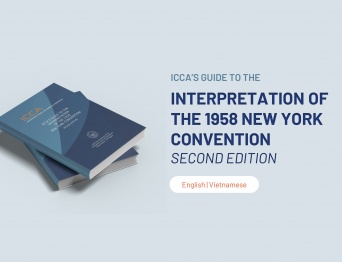
In August 2024, the International Council for Commercial Arbitration (ICCA) formally published the second edition of the ICCA’s Guide to the Interpretation of the 1958 New York Convention. The Guide is a clear, concise yet inclusive handbook, written in plain language, on the essential aspects of the scope, interpretation and application of the Convention. Though principally aimed at judges determining applications under the Convention, the Guide, which benefits from the extensive practical and academic experience of its authors (prominent arbitrators and ICCA members) will also be of interest to students, teachers and practitioners as an introduction to the Convention.
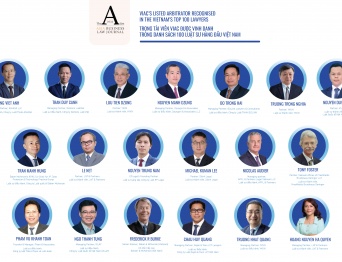
Asia Business Law Journal recently conducted research and announced the list of Vietnam's Top 100 Lawyers in 2024, which includes 19 Listed Arbitrators of Vietnam International Arbitration Center (VIAC) and Listed Mediators of Vietnam Mediation Centre (VMC) – a division of VIAC.
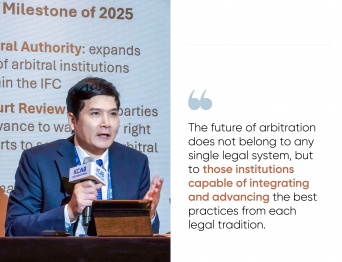
On 28 th October 2025, Mr. Vu Anh Duong, Permanent Vice President cum Secretary General of VIAC, shared his perspective at the Asia Civil law Summit, held as a part of events series under the Seoul ADR Festival – SAF 2025. Organized by the Korean Commercial Arbitration Board (KCAB), the event brought together a large number of experts from leading law firms, corporations, arbitration institutions, and mediation organizations across the region and around the world.
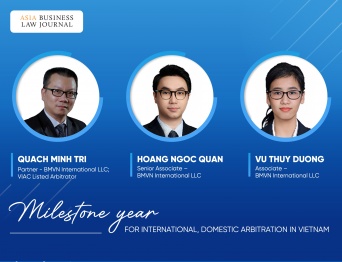
As Vietnam’s economy continues to grow rapidly and integrates into the global market, arbitration has become a common, favoured method of dispute resolution for investors, suppliers and businesses. Since the pandemic, there has been a significant rise in both domestic arbitration cases and international hearings involving parties located in Vietnam.
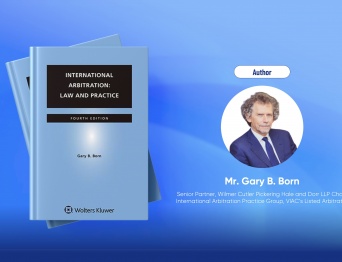
Building on the success of the third edition, VIAC’s Listed Arbitrator Gary B. Born has published the fourth edition of International Arbitration: Law and Practice, offering updated insights and refined perspectives on contemporary arbitration practice.
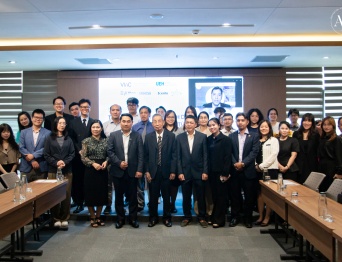
To begin the AMS 2025, on the morning of March 14, 2025, the Vietnam International Arbitration Centre (VIAC), in collaboration with the College of Economics, Law and Government, under UEH University (CELG-UEH), organized Workshop 01: “Time efficiency in arbitration under the effect of parallel proceedings” . The Workshop attracted nearly 200 participants, including arbitrators, mediators, lawyers, in-house counsels, and other legal professionals.
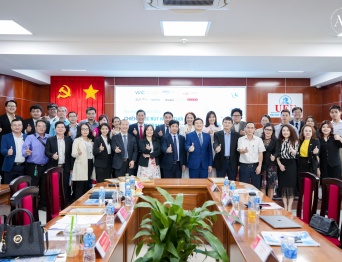
Continuing the first Workshop of the AMS 2025 series, on the morning of March 21, 2025, Workshop 02 “Strategies for enhancing time efficiency through the combination of Arbitration and Mediation” was held under the joint coordination of Vietnam International Arbitration Centre (VIAC) and HCMC University of Economics and Finance (UEF). The Workshop attracted the participation of over 150 delegates, including a significant number of arbitrators, mediators, lawyers, in-house counsels, and legal professionals.
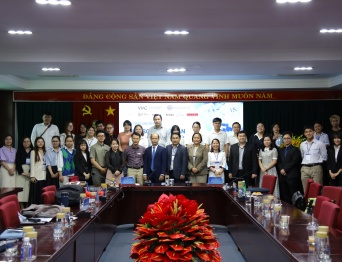
In the afternoon of March 28, 2025, the Workshop 03 “Controlling time for submission of evidence in Arbitration” was held under the joint coordination of Vietnam International Arbitration Centre (VIAC) and University of Economics and Law (UEL), Vietnam National University Ho Chi Minh City. The Workshop attracted the participation of over 100 delegates, including legal experts, arbitrators, lawyers, and lecturers, as well as students from legal training institutions, all of whom share an interest in arbitration in particular and alternative dispute resolution (ADR) methods in general.



.png "Trường đại học ngoại thương")

















.jpg)




.jpg)

.jpg)